-
AboutHoude Group is a high-tech enterprise specializing in engineering building materials. It actively promotes the research, development, and production of new materials, new processes, and new technologies. It is a well-known Chinese engineering building materials Brand company with independent intellectual property rights and core innovative products.
-
CaseHoude Group has been deeply cultivating overseas markets, successively establishing companies in Dubai, Hong Kong, Malaysia, Pakistan and other regions. It has good project cooperation in dozens of countries worldwide, with projects spanning Asia, Africa, and Europe. Its business scope includes various engineering fields such as highways, railways, airports, bridges, ports, and hydropower stations.
-
ProductsHoude Group holds independent intellectual property rights and multiple iOS certifications. It independently researches and produces several series of high-grade, high-quality engineering and construction materials, including Houde Brand cement concrete admixtures, asphalt concrete admixtures, engineering fibers, and geosynthetic composite materials. These high-quality products have been consistently well-received by numerous construction supervision units.
-
Industrial BaseThe company integrates industrial bases such as concrete admixtures and civil composite materials, relying on internationally leading research and development technology and intelligent production processes, to build an industrial system covering the entire chain of research and development, production, and sales. Driven by technology, we continuously provide green and reliable comprehensive solutions for global infrastructure construction, and strive to become a leading enterprise in the fields of engineering materials and intelligent equipment.
-
Open CollaborationWe actively open and share our resources and platforms, welcoming companies and individuals to actively contact us for agency and cooperation on products, markets, technology, and resources.
-
TalentHuman capital is the most precious asset of Houde. We have always attached great importance to employee development, allowing employees' abilities to develop more focused and clearly. A free and inclusive cultural atmosphere allows you to develop freely; your voice will be heard. Here, you will encounter not just colleagues, but also partners who grow side-by-side.
-
AboutHoude Group is a high-tech enterprise specializing in engineering building materials. It actively promotes the research, development, and production of new materials, new processes, and new technologies. It is a well-known Chinese engineering building materials Brand company with independent intellectual property rights and core innovative products.
-
CaseHoude Group has been deeply cultivating overseas markets, successively establishing companies in Dubai, Hong Kong, Malaysia, Pakistan and other regions. It has good project cooperation in dozens of countries worldwide, with projects spanning Asia, Africa, and Europe. Its business scope includes various engineering fields such as highways, railways, airports, bridges, ports, and hydropower stations.
-
ProductsHoude Group holds independent intellectual property rights and multiple iOS certifications. It independently researches and produces several series of high-grade, high-quality engineering and construction materials, including Houde Brand cement concrete admixtures, asphalt concrete admixtures, engineering fibers, and geosynthetic composite materials. These high-quality products have been consistently well-received by numerous construction supervision units.
-
Industrial BaseThe company integrates industrial bases such as concrete admixtures and civil composite materials, relying on internationally leading research and development technology and intelligent production processes, to build an industrial system covering the entire chain of research and development, production, and sales. Driven by technology, we continuously provide green and reliable comprehensive solutions for global infrastructure construction, and strive to become a leading enterprise in the fields of engineering materials and intelligent equipment.
-
Open CollaborationWe actively open and share our resources and platforms, welcoming companies and individuals to actively contact us for agency and cooperation on products, markets, technology, and resources.
-
TalentHuman capital is the most precious asset of Houde. We have always attached great importance to employee development, allowing employees' abilities to develop more focused and clearly. A free and inclusive cultural atmosphere allows you to develop freely; your voice will be heard. Here, you will encounter not just colleagues, but also partners who grow side-by-side.
After more than four years of operation, the Mombasa-Nairobi Railway has become a path to benefiting the people.
Release time:
2025-03-05 17:46
Source:
Xinhua News Agency, Nairobi, November 28 (Communication): More than four years after its opening, the Mombasa-Nairobi Railway has become a road to benefit the people
Xinhua News Agency reporters Wang Xiaopeng, Bai Lin, Li Hualing
At approximately 2:10 pm local time on the 27th, a passenger train from Mombasa slowly pulled into the Nairobi station of the Mombasa-Nairobi Railway after sounding its whistle. Reporters on the platform saw passengers getting off the train with their bags, some heading to the connecting train station to the Nairobi city center, and others going directly to the parking lot.
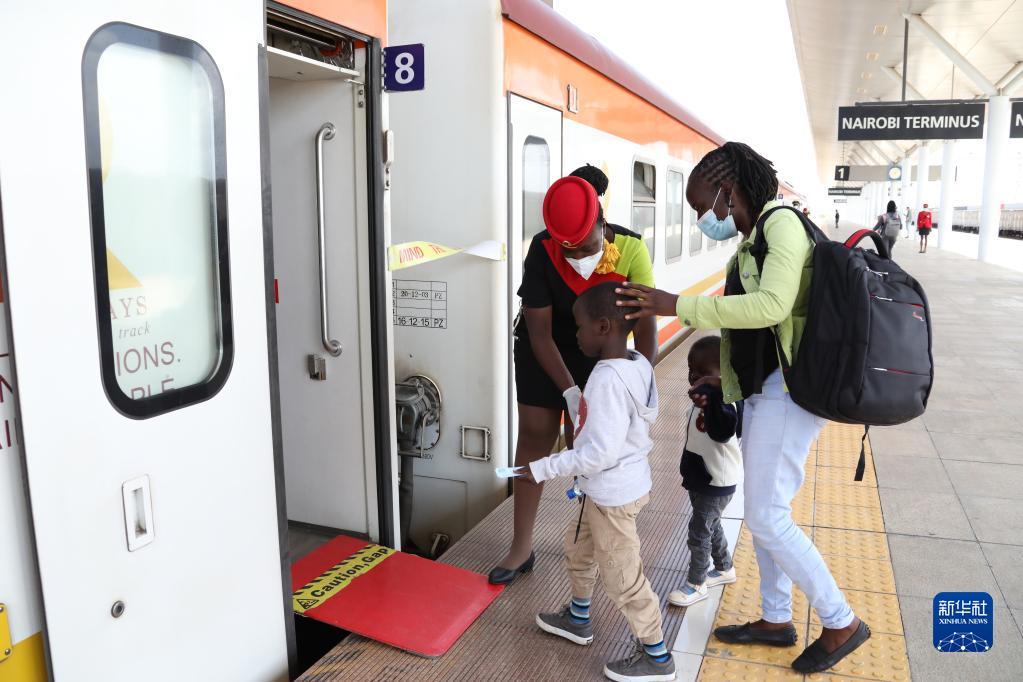
November 17, at the Nairobi station of the Mombasa-Nairobi Railway in Kenya, flight attendant Silvia Cibarak helps a child board the train. Photo by Dong Jianghui, Xinhua News Agency
About half an hour later, passengers waiting in the waiting room began to walk onto the platform and board the same train, with the final destination being Mombasa Station. Silvia Cibarak, the flight attendant in carriage 8, has been working on the Mombasa-Nairobi Railway for about 3 years. She told reporters that she used to be a salesperson before joining the Mombasa-Nairobi Railway. "More and more people are choosing the Mombasa-Nairobi Railway to travel, especially on weekends, the carriages are full." she said.
"The standard-gauge railway passenger train service, characterized by its safety, speed, comfort, and affordability, has become the preferred mode of transportation for the Kenyan people," said Li Jiuping, general manager of Africa Star Railway Operation Company, which operates the Mombasa-Nairobi Railway. "The number of passengers on the Mombasa-Nairobi Railway has been steadily increasing, especially during peak seasons and holidays, when additional passenger trains are added. Currently, passenger transport capacity has exceeded 10,000 people per day, and during peak passenger travel times, tickets are hard to come by. It is estimated that the number of passengers in 2021 will reach 2 million, a historical high."
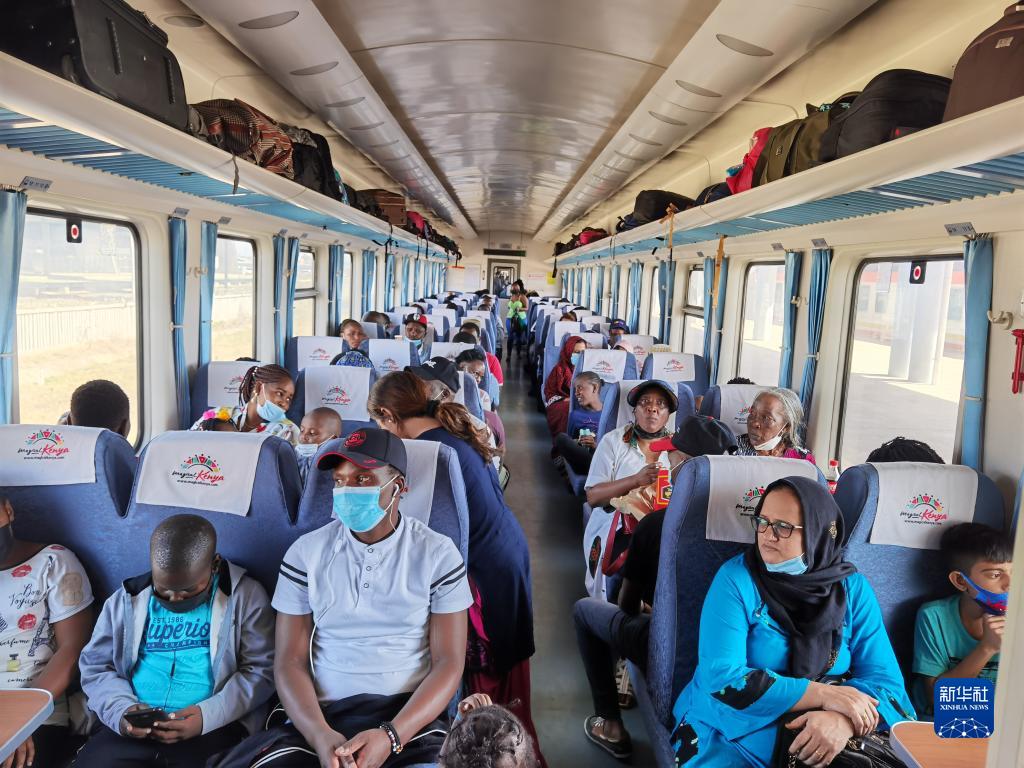
November 22, a passenger train bound for Mombasa is full of passengers at the Nairobi station of the Mombasa-Nairobi Railway in Kenya. Xinhua News Agency (photographed by Jesse Kosgei)
Li Jiuping said that the company adjusts the organization of passenger trains in a timely manner according to the travel characteristics of the local people, formulates large passenger flow plans to meet the travel needs of passengers, ensures railway transport capacity during holidays, and passenger transport data continues to improve. He said that the company has also added two "evening departure, morning arrival" passenger trains, making travel between Nairobi and Mombasa more convenient.
He said that despite the impact of the COVID-19 epidemic, the total number of passengers on the Mombasa-Nairobi Railway in 2021 still showed a steady growth trend, and the freight volume of the Mombasa-Nairobi Railway also showed a year-on-year upward trend. The Mombasa-Nairobi Railway opened in 2017, carrying 699,000 passengers and approximately 13,000 standard containers of goods that year.
Li Jiuping said that this year, an average of 17 freight trains are operated daily, and as of October 31, 382,000 standard containers have been transported, an increase of 8.6% year-on-year. Since its opening, a cumulative total of 1,480,900 standard containers have been transported.
Li Jiuping said that after the outbreak of the COVID-19 epidemic, the Kenyan government implemented a nationwide curfew and city lockdowns in some counties. The passenger trains of the Mombasa-Nairobi Railway were suspended for several months due to the epidemic, but Africa Star made every effort to ensure that the freight transport of the Mombasa-Nairobi Railway operated 24 hours a day without interruption. In addition to normal port cargo, it also increased the transportation of bulk grain, epidemic prevention materials, and other daily necessities, continuously transporting epidemic prevention and daily necessities to East Africa, helping the local fight against the epidemic.
He said that the efficient and fast railway transportation method of the Mombasa-Nairobi Railway has been recognized by the market. On the premise of maintaining the basic cargo source of Mombasa port containers, Africa Star has increased the volume of non-container cargo such as grain, cement clinker, and fertilizers; vigorously developed new freight products, such as grain container trains, extra-long container trains, and double-layer container trains, which have been widely praised and recognized by cargo owners.
Kenyan Minister of Transport and Infrastructure James Macharia said at the second anniversary celebration of the opening of the Mombasa-Nairobi Railway that the railway has had a positive impact on improving people's livelihood.
Macharia said that for the Kenyan people, the Mombasa-Nairobi Railway service has provided new job opportunities and opportunities to learn skills, and it has also helped to solve the transportation bottlenecks that have constrained Kenya's development, injecting vitality into Kenya's tourism, agriculture, and manufacturing industries.
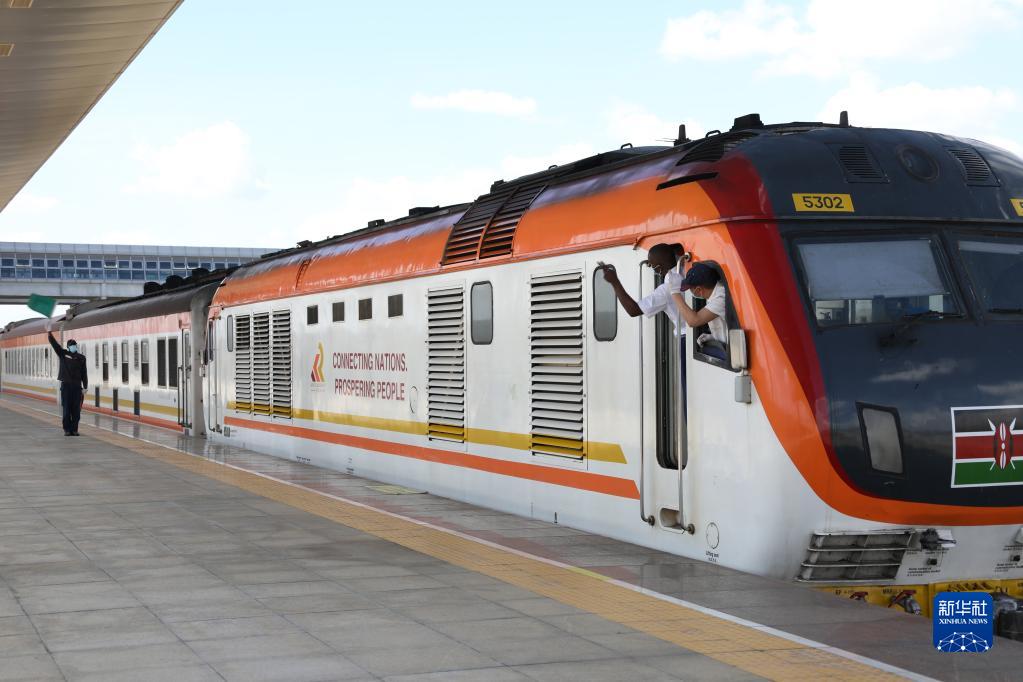
November 17, at the Nairobi station of the Mombasa-Nairobi Railway in Kenya, Chinese and Kenyan drivers prepare to depart. Photo by Dong Jianghui, Xinhua News Agency
It is reported that Africa Star currently has 2348 Chinese and Kenyan employees, of which 1898 are Kenyans, and all 52 positions, including train captains, are independently operated by Kenyan employees.
In addition, the Mombasa-Nairobi Railway operator spared no effort in promoting skills training. Mbugua is a train dispatcher on the Mombasa-Nairobi Railway and joined the operation shortly after the railway opened. In his view, the technology transfer from China is the key to the smooth operation of the Mombasa-Nairobi Railway, and it has had a lasting impact on the career development and personal lives of his younger colleagues. At the 1000-day commendation ceremony for the safe operation of the Mombasa-Nairobi Railway held last year, Mbugua was commended as one of the 27 winners of the first prize in the skills competition. At the same time, 10 security guards and 10 outstanding Chinese mentors were also commended.
Mbugua said gratefully: "Training and guidance have broadened my horizons and laid a solid foundation for my career development." He once went to China for training to learn about railway technology, safety management, and customer care.
As one of the first female drivers recruited for the Mombasa-Nairobi Railway, seven Kenyan girls, including Kansi, went to Baoji Railway Technician College in Shaanxi, China for 50 days of training in January 2017, where they became familiar with and mastered the structure and working principles of the Chinese-made diesel locomotives. Back in Kenya, Kansi continued her studies in practice. From inspecting trains along the tracks to operating the instrument panel in the driver's cab, Chinese master Yang Ming has imparted his knowledge to Kansi. "I saw the steady, meticulous, and kind qualities of the Chinese people from him." Kansi said. In addition to her rapid progress in professional skills, Kansi's Chinese level has also reached the fourth level of the Hanyu Shuiping Kaoshi (HSK), and she has successfully been promoted to a guidance driver, responsible for training a new batch of trainees.
The Mombasa-Nairobi Railway connects Mombasa, East Africa's largest port, and Nairobi, the capital of Kenya, and opened on May 31, 2017. The railway is about 480 kilometers long and is the first railway built in Kenya since its independence. It is a modern railway built using Chinese standards, technology, and equipment.
Previous Page
Next Page

Headquarters: 7th Floor, Tower B, R&F Center, Tongzhou District, Beijing
Zip Code: 101100
Telephone:010-58859568
Fax: 010-81580920
E-mail:bjhoude@chinahoude.com